Suspension Repair Near Me: 8 Noises That Mean Your Shocks and Struts Are Done
Your suspension does more than make your ride comfortable. Shocks, struts, springs, control arms, ball joints, sway bar links, and tie rods help keep your tires planted, your steering predictable, and your vehicle stable when you brake or turn.
That is why a new clunk, squeak, rattle, or change in ride quality deserves attention. If you are searching for suspension repair near me, the first step is understanding what your vehicle may be telling you. A noise does not always mean your shocks or struts have completely failed, but it can point to worn suspension or steering components that should be inspected.
Here are eight common warning signs drivers notice around Glen Burnie and the surrounding Baltimore-Annapolis area.
1. Clunking Over Bumps
A heavy clunk when you drive over a speed bump, pothole, or uneven pavement often means something in the suspension has excessive movement.
Possible causes include:
- Worn sway bar links
- Loose or damaged control arm bushings
- Worn ball joints
- A failing strut mount
- Damaged shocks or struts
Sway bar links connect the suspension to the vehicle’s stabilizer bar. When their joints wear out, they may knock as the suspension moves. Control arm bushings can also crack or deteriorate with age, allowing the control arm to shift instead of moving smoothly.
A clunk does not necessarily tell you which part has failed. It does tell you that a proper inspection is worthwhile, especially if the sound is getting louder or is accompanied by loose steering.
2. Squeaking or Creaking
A squeak or creak while driving slowly over bumps, turning into a driveway, or getting in and out of the vehicle may come from aging rubber bushings or suspension mounts.
Control arm bushings are designed to cushion movement between metal components. Over time, heat, moisture, road salt, and repeated impacts can dry them out or cause them to crack. When that happens, the rubber may squeak as it twists.
A creaking noise can also come from a worn ball joint, strut mount, or spring seat. These parts help the suspension move while the wheels steer and travel over uneven surfaces.
If the noise only happens when turning, do not assume it is harmless. Have the steering and suspension checked together.
3. Knocking When Turning
A knock or pop while turning the steering wheel can involve the suspension, steering system, or both.
Potential causes include:
- Worn tie rod ends
- Damaged ball joints
- A failing strut bearing or mount
- Loose control arm components
- Other steering linkage wear
Tie rods connect the steering system to the front wheels. If a tie rod end develops play, you may notice knocking, vague steering, or a vehicle that does not feel precise in corners.
Ball joints are equally important because they allow the steering knuckle to move while supporting the wheel assembly. Excessive wear can affect alignment and handling. Since both tie rods and ball joints are safety-related components, a turning noise should not be ignored.
4. Rattling From Under the Vehicle
A light rattling sound over rough roads may be caused by a loose sway bar link, worn suspension hardware, or a damaged mount. It can also come from something outside the suspension, such as a loose heat shield or exhaust component.
That is why sound location and timing matter. Does the rattle happen only over bumps? Does it occur when braking, accelerating, or turning? Does it seem to come from the front or rear of the vehicle?
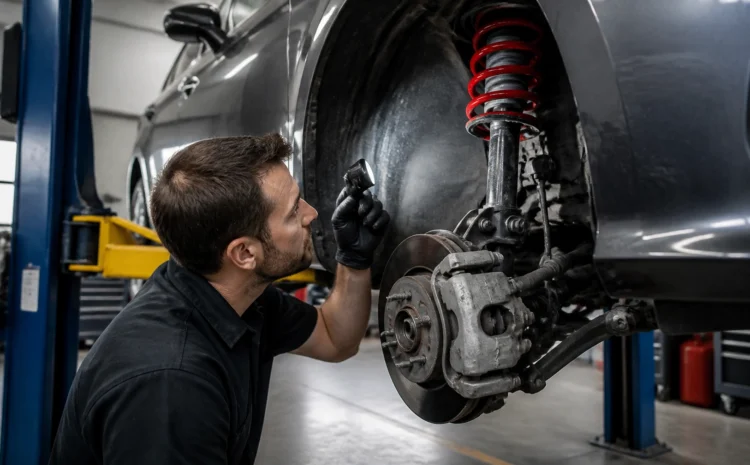
Loose suspension components may allow the wheel assembly to move more than it should. This can affect tire contact and make your vehicle feel unsettled. A technician can inspect the suspension while the vehicle is safely lifted and check for looseness, damaged bushings, leaking shocks, and missing or loose hardware.
5. Grinding or Harsh Metal-on-Metal Sounds
Grinding deserves prompt attention. Although it can sometimes be related to suspension damage, grinding is also commonly associated with brakes, wheel bearings, or a damaged wheel and tire.
For example, worn brake components may grind when you press the pedal. A failing wheel bearing may produce a growling or grinding sound that changes with vehicle speed or when you turn. A pothole can also bend a wheel or damage nearby components.
If grinding is accompanied by vibration, pulling, a burning smell, reduced braking performance, or a brake warning light, avoid unnecessary driving and arrange an inspection. At Blas Auto Service, a suspension concern can be evaluated alongside related brake repairs and tire or wheel issues. A free brake check may also be relevant when the noise occurs during braking.
6. A Bouncy or Floaty Ride
A vehicle that continues bouncing after a bump may have worn shocks or struts. These components control the movement of the springs. When they lose effectiveness, the vehicle can feel soft, floaty, or difficult to settle after uneven pavement.
You may notice:
- The car bounces several times after a bump
- The body sways more in turns
- The vehicle feels unstable at highway speeds
- The ride becomes unusually harsh or unsettled
- The front or rear end feels loose
A bouncy ride is more than a comfort issue. If the tires lose consistent contact with the road, steering and braking can become less predictable, particularly on wet pavement.
Shocks and struts do not always fail all at once. Their performance can gradually decline, making it easy to adjust to a ride that is no longer safe or normal.
7. Nosediving When Braking
Does the front of your car dip sharply when you stop? That nose dive may point to worn shocks or struts, but it should also prompt a complete brake and suspension inspection.
Healthy suspension helps control weight transfer as the vehicle slows. When the front end dives excessively, the car may feel unbalanced and take longer to settle. It can also contribute to uneven tire contact and make emergency braking feel less controlled.
Brake problems can create similar concerns, especially if the vehicle pulls, shudders, or requires more pedal pressure than usual. Because suspension and brake symptoms can overlap, it is best not to diagnose the problem based on one symptom alone.
8. Uneven Tire Wear or Cupping
Uneven tire wear is one of the clearest signs that your suspension, steering, or wheel alignment needs attention.
Cupping, also called scalloping, appears as a series of dips or raised spots around the tread. It may be caused by worn shocks or struts that allow the tire to bounce. Feathered tread, inside-edge wear, or outside-edge wear may point to alignment problems, worn steering parts, improper tire pressure, or a combination of issues.
A damaged ball joint, control arm bushing, or tie rod can change the wheel’s position as you drive. That can quickly ruin a tire, even if the tread looked healthy a short time earlier.
If you notice unusual wear, schedule a wheel alignment only after the suspension and steering components have been checked. An alignment cannot correct a loose or damaged part.
Why Glen Burnie Roads Can Be Hard on Suspension
Drivers throughout Glen Burnie, Baltimore, and Annapolis deal with patched pavement, potholes, uneven road surfaces, traffic congestion, and seasonal temperature changes. A pothole impact can place a sudden load on the tire, wheel, shock, strut, ball joint, or control arm.
Even if the tire does not go flat, the impact may bend a wheel, shift alignment, or accelerate wear in a suspension joint. Repeated impacts over time can turn a small amount of looseness into a noticeable clunk or unsafe handling problem.

What Happens If You Ignore Suspension Noise?
Suspension problems rarely repair themselves. Continuing to drive with worn components may lead to:
- Faster and uneven tire wear
- Poor handling during turns
- Increased body roll
- Longer or less controlled braking
- Additional wear on steering components
- Damage to wheels or tires
- More expensive repairs later
A minor noise does not always mean an immediate breakdown. However, it can be an early warning that a part is wearing out. Addressing it sooner gives you more options and helps protect the rest of the vehicle.
When to Search for Suspension Repair Near Me
Bring your vehicle in for an inspection if you hear a new clunk, squeak, knock, rattle, or grinding sound. You should also schedule service after a major pothole impact or when you notice bouncing, nose diving, steering looseness, pulling, vibration, or uneven tire wear.
If the vehicle feels difficult to control, a wheel appears crooked, the tire has a sidewall bulge, or grinding affects braking, do not continue driving farther than necessary. Call for guidance or arrange towing when appropriate.
At Blas Auto Service, we provide full-service automotive care for all makes and models, including domestic vehicles, imports, and luxury cars. Our team can inspect suspension components, steering parts, tires, brakes, and alignment to identify the actual cause instead of guessing from a sound. We also offer general maintenance, tire services, diagnostics, and other repairs in one convenient Glen Burnie location.
If you need auto repair near me or reliable auto repair in Glen Burnie, MD, visit us at 7721 Baltimore Annapolis Blvd, call 410-202-3959, or book an appointment online.
Do not turn a small suspension noise into a larger safety or tire problem. Contact Blas Auto Service today for a professional inspection and get back to driving with confidence.