Flat But Fixable? When a Tire Patch Is Safe and When You Need a Replacement
A flat tire does not always mean you need a new one. Sometimes a nail or screw creates a small puncture that can be repaired safely. In other cases, the damage is in a location or condition that makes a replacement the only responsible option.
Knowing the difference can save you money without putting your safety at risk. If you are searching for tire repair near me, the first step is not deciding between a patch and a replacement on your own. A technician needs to inspect the tire, wheel, and internal structure before recommending the right solution.
Here is what to look for and what to expect during a professional tire inspection.
When a Tire Can Usually Be Repaired
A tire may be repairable when the damage meets several important conditions:
- The puncture is small, generally no more than ¼ inch, or 6 millimeters, in diameter.
- The injury is in the central portion of the tread.
- The tire has not been driven for an extended distance while flat or severely underinflated.
- There is no additional damage to the sidewall, shoulder, belts, or inner liner.
- The tire has enough remaining tread and is otherwise in good condition.
- The puncture does not overlap or sit too close to another repair.
A small nail in the middle of the tread is the common example. If the tire is structurally sound, a shop may be able to remove it, inspect the inside, and complete a proper repair.
The United States Tire Manufacturers Association recommends a repair that seals both the puncture channel and the inner liner. In practical terms, that usually means a combination repair using a rubber stem and an interior patch: not simply pushing a plug into the hole from the outside.
Tread Damage Is Different From Sidewall Damage
Where the puncture occurred matters just as much as its size.
Central tread punctures
The central tread is the portion of the tire that normally contacts the road. A small puncture in this area has the best chance of being repaired, assuming the tire passes an internal inspection.
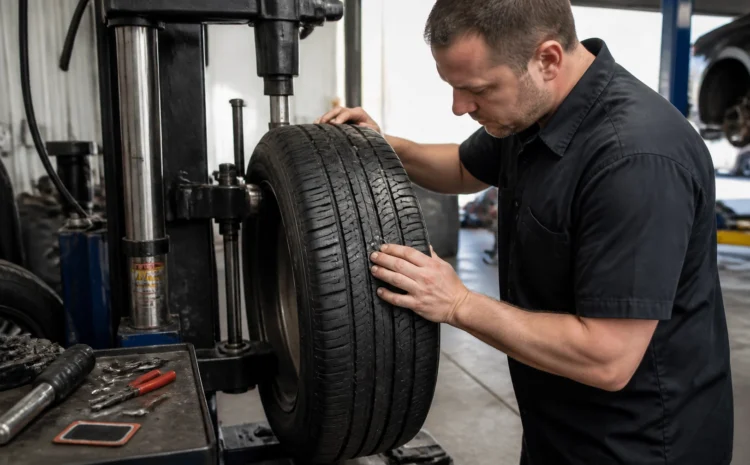
Even then, the tire should be removed from the wheel. A technician can then check for damage that is not visible from the outside, including:
- Scuffing caused by driving underinflated
- Damage to the inner liner
- Broken or separated belt material
- Exposed cords
- Additional punctures
- Irregular wear or cracking
Shoulder damage
The shoulder is where the tread begins to curve toward the sidewall. This area flexes more as the tire rolls and turns, so a puncture near the shoulder is generally not considered safely repairable.
A puncture that looks close to the outer tread may be rejected even if it is small. The exact boundary depends on the tire and the manufacturer’s guidelines, but damage near the shoulder or belt edge is a serious warning sign.
Sidewall damage
Sidewall punctures, cuts, bubbles, and deep scuffs typically require tire replacement. The sidewall supports the vehicle while flexing constantly, and it does not have the same repairable structure as the tread.
Do not rely on a sidewall plug or patch as a permanent fix. If you see a bulge, exposed cord, or cut in the sidewall, avoid driving on the tire and arrange for professional assistance.
Why a Plug Alone Is Not the Same as a Proper Repair
You may have seen an emergency tire plug kit at an auto parts store. These kits can be useful in a roadside emergency, but an outside-in plug is not the same as a complete tire repair.
A proper repair generally involves:
- Removing the tire from the wheel.
- Inspecting the inside for hidden or run-flat damage.
- Preparing the puncture channel.
- Filling the injury with a suitable rubber stem.
- Sealing the inner liner with an approved patch.
- Checking for leaks.
- Reinstalling and balancing the wheel.
A patch alone may not seal the puncture channel. A plug alone may not properly seal the inner liner. The combination is designed to address both parts of the injury.
This is one reason a quick visual check cannot always answer whether a tire is safe to repair. The outside may look acceptable while the inside has already been damaged by heat and friction from driving with low air pressure.
Situations When Replacement Is the Safer Choice
A tire should generally be replaced rather than repaired when any of the following conditions apply.
The puncture is in the sidewall or shoulder
As mentioned above, damage outside the central tread area is exposed to too much flexing and stress for a standard puncture repair.
The hole is too large
A puncture larger than about ¼ inch, or 6 millimeters, exceeds the common repair limit for passenger and light-truck tires. A large tear or gash is also different from a simple nail puncture and may involve internal structural damage.
You drove on the tire while it was flat
Driving even a short distance on a flat tire can damage the sidewalls and inner liner. The longer and faster you drive, the greater the risk.
Run-flat tires and low-profile tires may be particularly difficult to judge from the outside. If the tire was severely underinflated, it needs to be removed and inspected before anyone can determine whether it is safe to use again.
The tread is already worn out
Repairing a tire with very little tread left may only postpone replacement for a short time. Worn tread reduces wet-weather grip and increases the risk of losing traction.
Look for the built-in tread-wear indicators across the grooves. If the tread is level with those indicators, the tire has reached the replacement point. Uneven wear, bald spots, or deep grooves caused by alignment or suspension problems are also reasons to have the whole set evaluated.
There are multiple or overlapping repairs
Several punctures do not automatically mean a tire must be discarded, but repairs must be properly spaced. If injuries are too close together or a new repair would overlap an older one, the casing may no longer be safe.
A tire with repeated punctures may also be nearing the end of its useful life, especially if it has significant wear or has been driven underinflated.
There are bulges, cracks, or exposed cords
A bulge often indicates damage to the tire’s internal structure. Cracking from age, severe curb impact, or exposed cords are not normal punctures and cannot be corrected with a patch.
When these signs are present, replacement is the appropriate choice.
What to Do Before You Reach a Tire Repair Shop
If your tire is losing air, pull over somewhere safe as soon as possible. Turn on your hazard lights and check whether the tire is visibly damaged. Do not remove a nail or screw if it is still lodged in the tread; removing it may cause the tire to lose air more quickly.
If the tire is completely flat, use your spare if your vehicle has one, or arrange for roadside assistance. Driving on a flat tire can turn a repairable puncture into a replacement.
If the tire is holding air, check the pressure with a gauge and follow the vehicle manufacturer’s recommended pressure listed on the driver’s doorjamb label. The number printed on the tire is usually the maximum pressure, not necessarily the correct setting for your vehicle.
Once you arrive at a shop, ask whether the tire was removed from the wheel and inspected internally. A trustworthy recommendation should be based on the tire’s condition: not just the location of the visible puncture.
Tire Repair Is Only Part of the Picture
A repaired tire still needs to work properly with the rest of the vehicle. During an inspection, it is worth checking for uneven wear, incorrect inflation, wheel damage, and alignment problems.
For example, a tire that repeatedly loses air may have more than one issue:
- A puncture in the tread
- A leaking valve stem
- A damaged wheel
- A bead seal problem
- Uneven wear caused by poor alignment
Blas Auto Service provides tire repairs, rotations, and wheel alignment services for drivers in Glen Burnie and nearby communities. Looking at the full picture helps prevent the same tire problem from returning.

Replacing a Tire Can Also Be an Opportunity to Upgrade
Sometimes a tire cannot be repaired, or your current tires are simply worn enough that replacement makes more sense. When that happens, the right tire and wheel combination can improve your vehicle’s appearance and fit your driving needs.
Blas Auto Service offers tire and wheel deals and carries premium rim brands including Fuel, Rotiform, and Black Rhino. Our team can help you choose an appropriate setup and provide professional installation.
Before buying new wheels, make sure the size, bolt pattern, offset, and tire specifications are compatible with your vehicle. A proper fit matters for handling, clearance, ride quality, and even wear. If you are replacing only one or two tires, tread depth and tire type should also be considered so the vehicle remains balanced.
Get an Honest Answer Before You Spend Money
A nail in the middle of a healthy tire may be a straightforward repair. A puncture near the shoulder, a tire driven flat, or a sidewall bulge is a different situation entirely.
The safest approach is to have the tire removed, inspected, and evaluated against accepted repair guidelines. That way, you are not paying for a replacement when a proper repair is safe: and you are not risking a tire failure by repairing damage that should have been replaced.
If you need tire repair near me in Glen Burnie, bring your vehicle to Blas Auto Service at 7721 Baltimore Annapolis Blvd. Our team works on all makes and models and can inspect your tire, explain your options clearly, and complete the repair or replacement your vehicle needs. Book an appointment online or call (410) 202-3959 today.