10 Reasons Your Tire Pressure Light Keeps Coming On (And How to Fix It)
When the tire pressure light comes on during a chilly November morning, it’s tempting to blame the cold and carry on. Cooler air does lower tire pressure, but a warning that keeps returning may point to a slow leak, wheel damage, or a problem with the tire pressure monitoring system (TPMS).
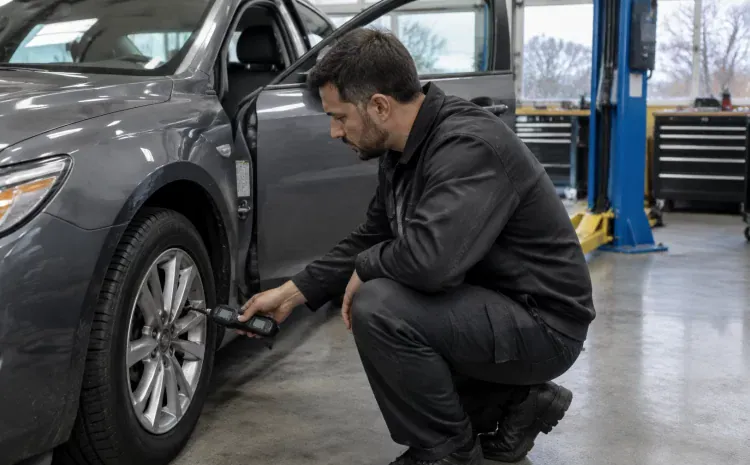
Start by checking all four tires with a reliable gauge. Set them to the cold pressure listed on your driver’s doorjamb placard or in your owner’s manual, not the maximum pressure printed on the tire’s sidewall. If a tire looks visibly low or damaged, don’t continue driving on it.
Here are 10 reasons the light may keep coming back, and what to do about each one.
1. Cold weather lowered the pressure
Tire pressure drops about 1 psi for every 10°F decrease in temperature. That can be enough to trigger the TPMS warning when a tire was already close to the vehicle’s recommended minimum.
What to do: Check pressure when the tires are cold, ideally after the car has been parked for a few hours. Inflate each tire to the doorjamb placard specification, then keep an eye on the readings as temperatures change. Don’t add a set amount of extra air just because winter is coming.
2. A nail or other object is causing a slow leak
A small puncture can let air escape gradually. You might not notice a change in how the car handles, but the pressure can fall enough for the light to return a day or two after you inflate the tire.
What to do: Look over the tread for a nail or screw, but don’t pull out an embedded object. If one tire keeps losing pressure, have it inspected. A repair may be possible when the puncture is in a repairable part of the tread and the tire’s internal structure is sound. Damage to the sidewall or shoulder, or a tire driven while severely underinflated, may call for replacement instead. A professional inspection, not just a quick look from outside, determines which is appropriate.
3. The valve stem or its seal is leaking
The valve stem is where air enters the tire. A worn or damaged stem, loose valve core, or deteriorated seal around a TPMS sensor can leak slowly, even when the tread looks fine.
What to do: Ask for a leak check around the valve. A shop can test the stem and its seals, then replace the faulty part if needed. Avoid repeatedly tightening or replacing parts without identifying where the air is escaping.
4. Air is escaping around the tire bead
The bead is the edge of the tire that seals against the wheel. Corrosion, dirt, damage, or a poor seal in that area can let air seep out over time.
What to do: Have the tire and wheel inspected for a bead leak. Finding and correcting one may require removing the tire from the wheel so the sealing surfaces can be checked. If the wheel or tire is damaged, a technician can explain whether a repair is suitable or replacement is the safer choice.

5. A pothole or curb bent or cracked the wheel
A hard impact can damage a rim. A bend or crack may cause a slow leak where the tire seals against the wheel, and the damage isn’t always obvious while the wheel is on the car.
What to do: If the warning began after an impact, or you notice vibration, a visible bend, or repeated air loss, have the tire and wheel checked. A damaged wheel may need replacement; simply adding air won’t solve the underlying problem. If you’re considering new rims, Blas Auto Service offers premium options from Fuel, Rotiform, and Black Rhino with professional installation.
6. A TPMS sensor or its battery has failed
Some TPMS sensors have batteries that eventually wear out. A sensor can also be damaged during tire service or stop communicating correctly with the vehicle. When that happens, the warning light may stay on even when your tire pressures are correct.
What to do: Check your owner’s manual for your vehicle’s warning-light behavior. On many vehicles, a TPMS light that flashes before staying on indicates a system fault, but the exact signal varies. If the pressures are correct and the warning remains, ask a shop to scan the sensors and check for a failed battery or other TPMS issue.
7. An overnight temperature swing pushed a tire below the warning threshold
A sudden cold night can make the light appear first thing in the morning, especially if one tire was already near the warning threshold. The light might go off as driving warms the tires, but that doesn’t confirm the pressure is correct.
What to do: Check and adjust pressures while the tires are cold. If the light continues returning after you’ve set them correctly, don’t assume temperature is the only cause. Note which tire loses pressure and have it checked for a leak.
8. The warning relates to the spare tire
Some vehicles monitor the spare; others don’t. Depending on your vehicle, a low spare or a temporary spare installed on the car can cause a TPMS warning or system message.
What to do: Check your owner’s manual to see whether the spare is monitored and what pressure it requires. If you’ve installed a temporary spare, follow the vehicle’s instructions and have the regular tire repaired or replaced as appropriate. Don’t assume every car handles spare tires the same way.
9. Uneven wear or alignment problems are adding to the tire trouble
Misalignment does not directly let air out of a tire. But unusual wear can weaken the tire or reveal a separate problem, and repeated loss of pressure alongside uneven wear deserves attention. Worn tires may also be more vulnerable to damage.
What to do: Look for uneven tread wear, a car that pulls to one side, or a steering wheel that sits off-center. Have the tires inspected and, if the symptoms point that way, ask whether an alignment check is appropriate. If you’re searching for wheel alignment near me, Blas Auto Service provides wheel alignment service in Glen Burnie.
10. A warm-weather top-up left the pressure wrong
Pressure readings change with temperature. If you checked or filled your tires when they were hot, or used the number printed on the tire sidewall instead of the vehicle’s recommended pressure, you may have set them incorrectly. Overinflation itself usually doesn’t trigger a low-pressure warning, but it can lead to confusion when temperatures later fall and the light comes on.
What to do: Recheck all tires cold and use the driver’s doorjamb placard as your guide. Don’t release air from a hot tire just because its reading is higher; let it cool, then measure again. The NHTSA tire safety guidance also recommends following the vehicle manufacturer’s pressure specifications.
A quick way to decide what to do next
If you see a visibly low tire, a bulge, or other damage, stop somewhere safe and avoid driving on it. If the tire appears normal, check all four pressures with a gauge and record the readings. A tire that repeatedly loses air needs a leak inspection; a warning that stays on despite correct pressures may need a TPMS scan.
If you need tire repair near me, Blas Auto Service offers tire repairs and rotations for drivers in Glen Burnie. We can inspect the tire and wheel, help identify a recurring pressure problem, and explain whether the tire may be repairable or needs replacement.
Get a recurring tire-pressure warning checked
A cold snap can explain a one-time warning, but it shouldn’t be the default explanation when the light keeps returning. Correct pressure helps your tires wear as intended and supports safe handling, so take the warning seriously, check the pressures cold, and have persistent air loss diagnosed.
Blas Auto Service has served Glen Burnie for over 15 years. We work on all makes and models, and our bilingual staff can help you understand what your vehicle needs. Visit us at 7721 Baltimore Annapolis Blvd, Glen Burnie, MD 21060, or call (410) 202-3959 to arrange a tire inspection. We’ll help you get to the bottom of the warning before it turns into a bigger problem.