Why Your Car is Pulling to One Side: The Real Cost of Ignoring Wheel Alignment around Glen Burnie
We’ve all been there: you’re driving down a straight stretch of the Ritchie Highway, and you notice that if you loosen your grip on the steering wheel for even a second, your car starts drifting toward the shoulder. You might find yourself constantly “fighting” the wheel just to stay centered in your lane. While it’s tempting to think of this as just a minor quirk of an aging vehicle, that slight tug to the left or right is actually a cry for help from your car’s suspension system.
Ignoring a car that pulls to one side is a bit like ignoring a small leak in your roof. It starts as a nuisance, but if left unaddressed, it creates a domino effect of mechanical issues that can lead to massive repair bills and dangerous driving conditions. For drivers in Glen Burnie, understanding the “why” behind this pulling and the real financial consequences of delayed maintenance is the first step toward keeping your vehicle: and your wallet: in good shape.
What Exactly is Wheel Alignment?
To understand why your car pulls, we first have to look at what’s happening under the chassis. Wheel alignment, often referred to as “tracking,” is not actually an adjustment of the tires themselves. Instead, it is an adjustment of the vehicle’s suspension: the complex system of springs, shocks, and linkages that connects the car to its wheels.
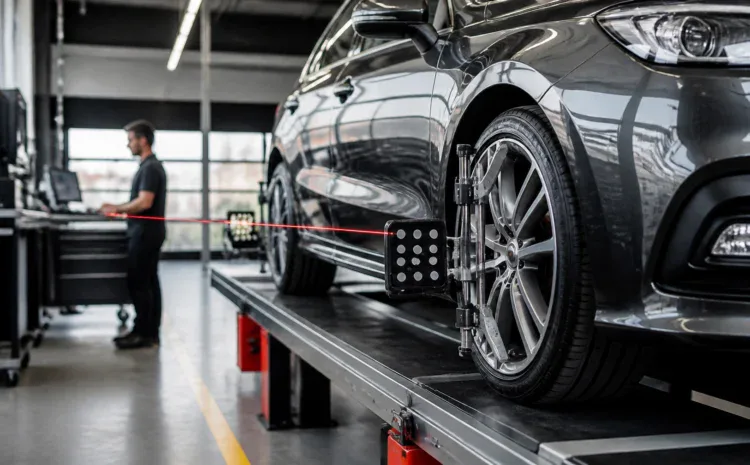
When our certified technicians perform a wheel alignment near me, they are using high-tech laser systems to ensure the tires are perfectly square to the road and parallel to each other. We look at three primary angles:
- Camber: This is the inward or outward angle of the tire when viewed from the front. If the wheels tilt too far in or out, it’s usually a sign of worn bearings or ball joints.
- Toe: Think of this like looking down at your own feet. If you angle your toes inward toward each other, that’s “toe-in.” In a car, improper toe alignment means the tires are essentially scrubbing against the pavement rather than rolling smoothly.
- Caster: This angle helps balance steering, stability, and cornering. Specifically, it’s the angle of your steering axis when viewed from the side.
Even a slight deviation in these angles: fractions of an inch: can cause the “pulling” sensation you feel while driving throughout Glen Burnie.
Why is Your Car Pulling to One Side?
While misalignment is the most common culprit, it isn’t the only reason a car might drift. When you bring your vehicle in for auto repair in Glen Burnie, MD, we perform a comprehensive check to rule out other issues.
Sometimes, the pulling is caused by “conicity,” a manufacturing flaw in a tire, or simply uneven tire pressure. If one front tire is significantly lower than the other, the car will naturally pull toward the side with lower pressure. However, if your tire pressures are even and the car still wanders, you are likely looking at a mechanical alignment issue or potentially a sticking brake caliper.
In Maryland, our roads can be particularly tough on suspension systems. Between the fluctuating temperatures and the occasional pothole damage, it doesn’t take much to knock your vehicle out of spec.
The Financial “Hidden Costs” of Ignoring Misalignment
Many drivers put off an alignment because they think they are “saving” $100 or so in the short term. However, the math rarely works out in the driver’s favor. Ignoring that pull to the right or left is one of the most expensive “savings” you can make.

Premature Tire Replacement
The most immediate casualty of poor alignment is your tires. When wheels aren’t pointed straight, the tread doesn’t wear evenly across the surface. Instead, one edge of the tire: either the inside or the outside: takes the brunt of the friction.
This is known as “feathering” or “camber wear.” You might have thousands of miles of tread left on the outside of the tire, but if the inside is worn down to the metal cords, the tire is legally and physically “bald” and unsafe to drive. Replacing a full set of premium tires can cost anywhere from $600 to over $1,200. By contrast, a standard alignment is a fraction of that cost and could have doubled the life of those tires.
If you’re already seeing this wear, you’ll likely need to search for tire repair near me or a full replacement sooner than expected. We often recommend regular tire rotations to help catch these wear patterns before they become terminal.
Fuel Efficiency Drop
When your wheels aren’t aligned, they are essentially “dragging” against the road rather than rolling. This creates extra rolling resistance. To overcome this resistance and keep the car moving at highway speeds, your engine has to work harder and burn more fuel.
While it might only be a 2% or 3% drop in fuel economy, that adds up quickly over months of commuting around Glen Burnie. If you’re noticing your gas mileage slipping for no apparent reason, your alignment might be the silent thief at the pump.
Strain on Suspension and Steering Components
Your car is a symphony of moving parts designed to work in harmony. When the alignment is off, it places “unnatural” stress on other components. Tie rod ends, ball joints, and control arm bushings all have to absorb vibrations and forces they weren’t designed to handle constantly.
Over time, this leads to premature failure of these parts. A simple $100 alignment check can prevent a $1,500 suspension overhaul down the road. At Blas Auto Service, we’ve seen countless cases where a driver ignored a minor pull for a year, only to end up needing a complete front-end rebuild because the vibration and stress shook everything else loose.
Safety Risks: It’s Not Just About Your Wallet
Beyond the financial hit, there is a very real safety concern. A car that pulls to one side is inherently less stable. In an emergency situation: such as having to swerve to avoid a deer or a sudden stop on a rain-slicked Maryland road: a misaligned car will not respond as predictably as it should.
Misalignment also affects your car’s electronic stability control and anti-lock braking systems. These modern safety features rely on sensors that assume the wheels are pointing where the steering wheel says they are. If there’s a discrepancy, these systems might not intervene correctly when you need them most.
When to Search for Wheel Alignment Near Me
You don’t always have to wait for the car to start pulling to know you need an alignment. Here are a few “proactive” times to visit our shop:
- After hitting a major pothole: If you hit a crater in the road and your steering wheel suddenly feels “off,” don’t wait. The impact likely bent or shifted a suspension component.
- When buying new tires: Never put brand-new tires on a car that hasn’t been aligned. You’ll start ruining your investment the moment you drive off the lot.
- Every 6,000 to 10,000 miles: As a general rule of thumb, having your alignment checked once a year or every other oil change is cheap insurance against the high costs of tire wear.
- After suspension work: If you’ve had shocks, struts, or any steering components replaced, an alignment is a mandatory final step.
Why Choose Blas Auto Service for Your Auto Repair in Glen Burnie, MD?
At Blas Auto Service, we’ve spent over 15 years helping our neighbors in Glen Burnie keep their vehicles in peak condition. We understand that your car is your lifeline: it gets you to work, your kids to school, and your family on weekend trips.
Our facility is equipped with cutting-edge alignment technology that allows us to dial in your vehicle’s specifications with extreme precision. Whether you’re driving a domestic truck, a Japanese import, or a luxury German sedan, our bilingual staff is here to explain the process clearly and get you back on the road safely.
We don’t just “fix” the pull; we look at the big picture. We’ll check your tires, inspect your suspension, and ensure your vehicle is performing at its best. Plus, while you wait, you can relax in our comfortable waiting area with a complimentary coffee or tea.
Conclusion
A car that pulls to one side is more than just an annoyance; it’s an expensive problem in the making. By ignoring the signs of bad wheel alignment, you’re essentially volunteering to pay for new tires, extra gas, and major suspension repairs much sooner than necessary.
Don’t let a small drift turn into a massive debt. If your steering wheel feels off or your tires are wearing unevenly, it’s time to take action.
Ready to get your car back on the straight and narrow? Contact Blas Auto Service today to schedule your professional wheel alignment and experience the best auto repair in Glen Burnie, MD. Let’s keep your ride smooth and your tires lasting longer!