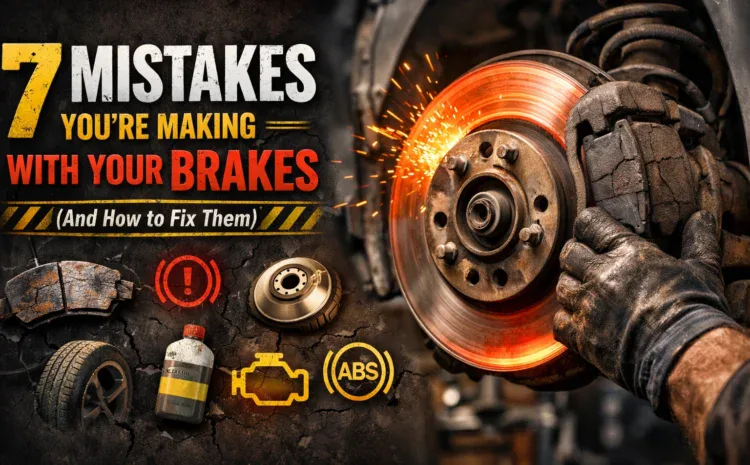
7 Mistakes You’re Making with Your Brakes (And How to Fix Them)
We’ve all been there. You’re driving down Ritchie Highway, the light turns yellow, and as you press the pedal, you hear a high-pitched squeal or feel a slight shudder under your foot. Your first instinct might be to turn up the radio and hope it goes away, but deep down, that little knot of anxiety in your stomach tells you otherwise.
Let’s face it: your brakes are the most important safety feature on your vehicle. When they aren’t working perfectly, it’s not just a matter of “maintenance”, it’s a matter of keeping you and your family safe on the road. At Blas Auto Service, we see neighbors every day who are unintentionally wearing down their braking systems faster than necessary.
The good news? Most brake issues are avoidable. By shifting a few habits and knowing what to look for, you can save money and gain serious peace of mind. Here are the seven biggest mistakes we see drivers making with their brakes and exactly how you can fix them.
1. The “Turn Up the Radio” Strategy (Ignoring Unusual Noises)
This is the most common mistake of all. When your car starts chirping, squealing, or grinding, it’s literally talking to you. It’s saying, “Hey, I need a little help here!”
Many brake pads are designed with a small metal tab called a “wear indicator.” When the pad gets thin, that tab scrapes against the rotor to create a high-pitched squeal. It’s an intentional warning. If you ignore that squeal, the pad eventually wears away completely, leading to “metal-on-metal” grinding. This doesn’t just sound terrible; it destroys your rotors, turning a simple pad replacement into a much more expensive brake repair in Glen Burnie.
How to Fix It: As soon as you hear a new noise, bring it in for a look. At Blas Auto Service, we offer free brake checks to catch these issues before they turn into a safety hazard.

2. Riding the Brakes Downhill or in Traffic
If you’re the type of driver who keeps a constant, light pressure on the brake pedal while going down a long hill or sitting in heavy traffic, you’re “riding the brakes.” This generates an incredible amount of friction and heat.
Brake systems are designed to handle heat, but they need time to cool down. Constant pressure causes the pads and fluid to overheat, which can lead to “brake fade”: a terrifying situation where your pedal feels “spongy” and your car takes much longer to stop. Over time, this chronic overheating can even warp your rotors.
How to Fix It: Use “engine braking” on long descents by shifting into a lower gear, and practice “staccato” braking: apply the brakes firmly to slow down, then release the pedal completely to allow the components to breathe.
3. Neglecting Your Brake Fluid
Most drivers know they need an oil change, but many forget that brake fluid is a vital part of preventative maintenance. Brake fluid is “hygroscopic,” which is a fancy way of saying it absorbs moisture from the air.
Over time, this moisture can lead to internal corrosion in your brake lines and calipers. More importantly, water has a much lower boiling point than brake fluid. If your fluid is contaminated with water, it can boil during heavy braking, creating air bubbles that make your brakes feel soft or unresponsive.
How to Fix It: Have your brake fluid tested for moisture content and clarity. Most manufacturers recommend a fluid flush every two years or 30,000 miles. It’s a small investment that protects the entire hydraulic system.

4. Buying “Budget” Brake Parts
We get it: saving money feels good. However, when you’re searching for brake repair near me, you might be tempted by shops offering incredibly low prices or “cheap” pads from a big-box store.
Low-quality brake pads are often made of inferior materials that wear out faster, create excessive dust, and: most importantly: have longer stopping distances. In an emergency, those extra ten feet of stopping distance can be the difference between a close call and a collision.
How to Fix It: Always opt for high-quality or OEM (Original Equipment Manufacturer) parts. They are designed specifically for your vehicle’s weight and performance needs. To understand why quality matters, check out our guide on how to find an honest auto repair shop in Glen Burnie.
5. Attempting “Advanced” DIY Without the Right Tools
We love a hands-on car owner, but modern braking systems are more complex than they used to be. Many newer vehicles have electronic parking brakes or integrated ABS (Anti-lock Braking System) modules that require specialized software to reset.
Common DIY mistakes include hanging the heavy brake caliper by the rubber brake hose (which can damage the internal lining) or failing to properly lubricate the “slide pins.” If those pins aren’t greased, your pads won’t move freely, causing uneven wear and dragging.
How to Fix It: If you aren’t 100% confident in your ability to bleed the lines or reset the electronics, leave it to the pros. Your safety isn’t worth a DIY experiment. Our team at Blas Auto Service has the specialized equipment to handle even the most advanced automotive repair in Glen Burnie, MD.

6. Overlooking the “Spongy” Pedal Feel
Does your brake pedal feel like you’re stepping on a marshmallow? If you have to pump the brakes to get them to bite, or if the pedal slowly sinks to the floor while you’re stopped at a light, you have a serious problem. This usually indicates air in the lines or a failing master cylinder.
Ignoring a soft pedal is dangerous because it means your braking system is losing the hydraulic pressure it needs to clamp the pads onto the rotors. It’s not a problem that fixes itself: it only gets worse.
How to Fix It: This is a “do not drive” situation. A spongy pedal requires an immediate inspection and likely a system “bleed” to remove air or a replacement of a failing hydraulic component.
7. Waiting Until the “Winter” or “Summer” Service
Many people wait for their annual inspection or their seasonal tire rotation to have their brakes looked at. While regular tire rotations are a great time to peek at the brakes, your driving habits in Glen Burnie: with all our stop-and-go traffic and coastal humidity: can wear brakes down faster than the national average.
Waiting too long often means you’re replacing rotors that could have been saved with a simple pad swap.
How to Fix It: Don’t wait for a milestone. If you notice a change in how the car stops, brings it in. Prevention is always cheaper than a cure.

How to Empower Yourself: A Quick Brake Checklist
When you visit an auto repair shop in Glen Burnie, MD, it helps to know what to ask. Use this checklist to stay informed:
- How much life is left on the pads? (Usually measured in millimeters; 3mm or less means it’s time for a change).
- Are the rotors being turned (resurfaced) or replaced? (Modern rotors are often too thin to be turned and must be replaced for safety).
- Did you inspect the brake lines for cracks or leaks?
- Is the brake fluid clean and at the correct level?
- Are the slide pins properly lubricated?
Why Your Neighbors Trust Blas Auto Service
At Blas Auto Service, we aren’t just mechanics; we’re your neighbors. We know that when you bring your car in for brake repair in Glen Burnie, you’re trusting us with the safety of your family. That’s a responsibility we take seriously.
We believe in transparency. That’s why we offer free brake inspections. We’ll show you exactly what we see, explain what’s urgent and what can wait, and provide a fair, honest estimate. We use high-quality parts because we want you to drive away with the peace of mind that comes from knowing your car will stop exactly when you need it to.
Whether you’ve noticed a weird sound or it’s just been a while since your last check-up, don’t let brake maintenance slide. Let’s keep our Glen Burnie roads safe together.
Ready for a quick check? Contact us today or stop by to see why our community keeps coming back to us for honest, reliable service. You can also check out our current specials for discounts on essential maintenance!